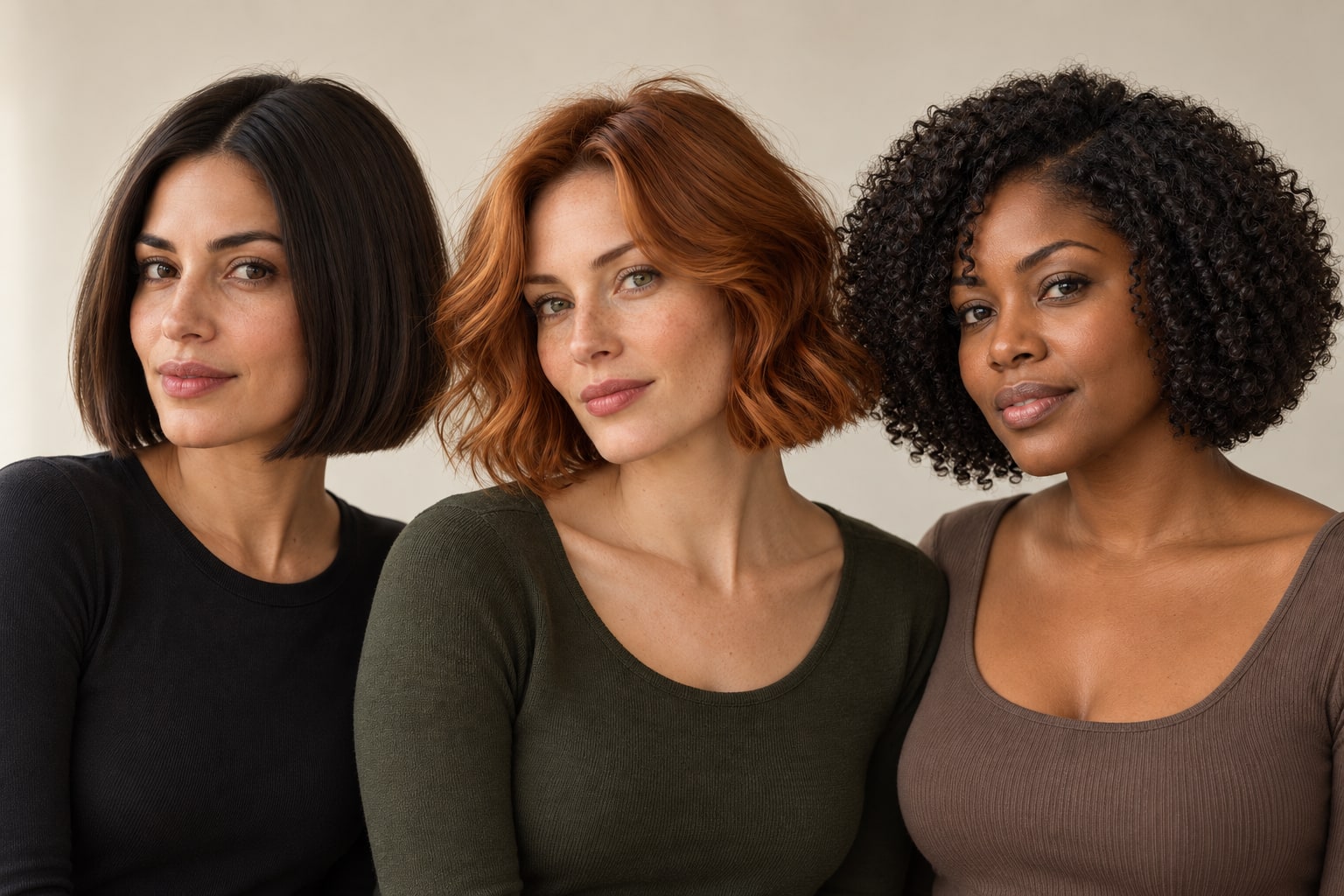
Compare seventeen bob shapes, from a precise chin-length cut to a wavy lob and a rounded coily bob, with practical notes on fringe, styling and upkeep.

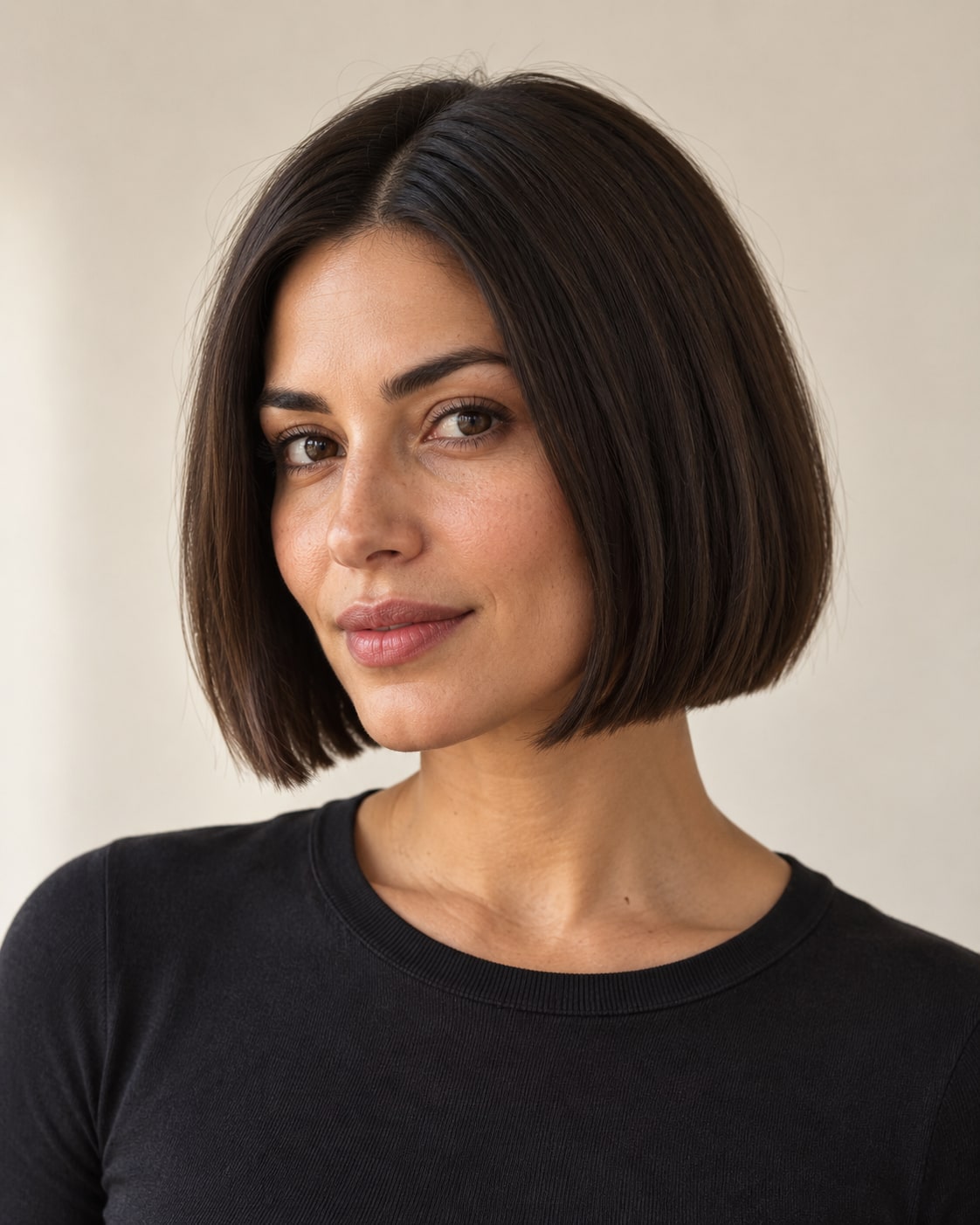
Sleek Chin-Length Blunt Bob
A center part and an even chin-length edge make the outline the main feature of this dark brunette bob. The sides fall close to the face, while the ends stay substantial rather than feathering away. It is a useful reference if you want to compare a compact length with a smooth, clearly defined finish.
Ask your stylist where the edge should land when your hair is dry and how any natural bends will affect it. For a similar styled finish, direct the hair downward with a brush and use heat protection before heated tools. A small amount of smoothing product through the ends may be enough; adding too much near the part can flatten the shape.
French Bob with an Airy Fringe
A short fringe changes the balance of this jaw-length chestnut bob, bringing attention to the space around the eyes and cheeks. The bangs separate into light pieces rather than forming a solid horizontal strip. The softly curved sides give you a reference for a compact bob that retains a little movement.
Discuss how short the fringe should be after it dries, particularly if your front hairline has a cowlick or wave. You can reset the bangs with a little water and direct them into place before working on the rest. Keep the ends soft with your fingers or a small brush, and ask how often the fringe will need trimming to stay at your preferred length.
Full Italian Bob with a Soft Side Part
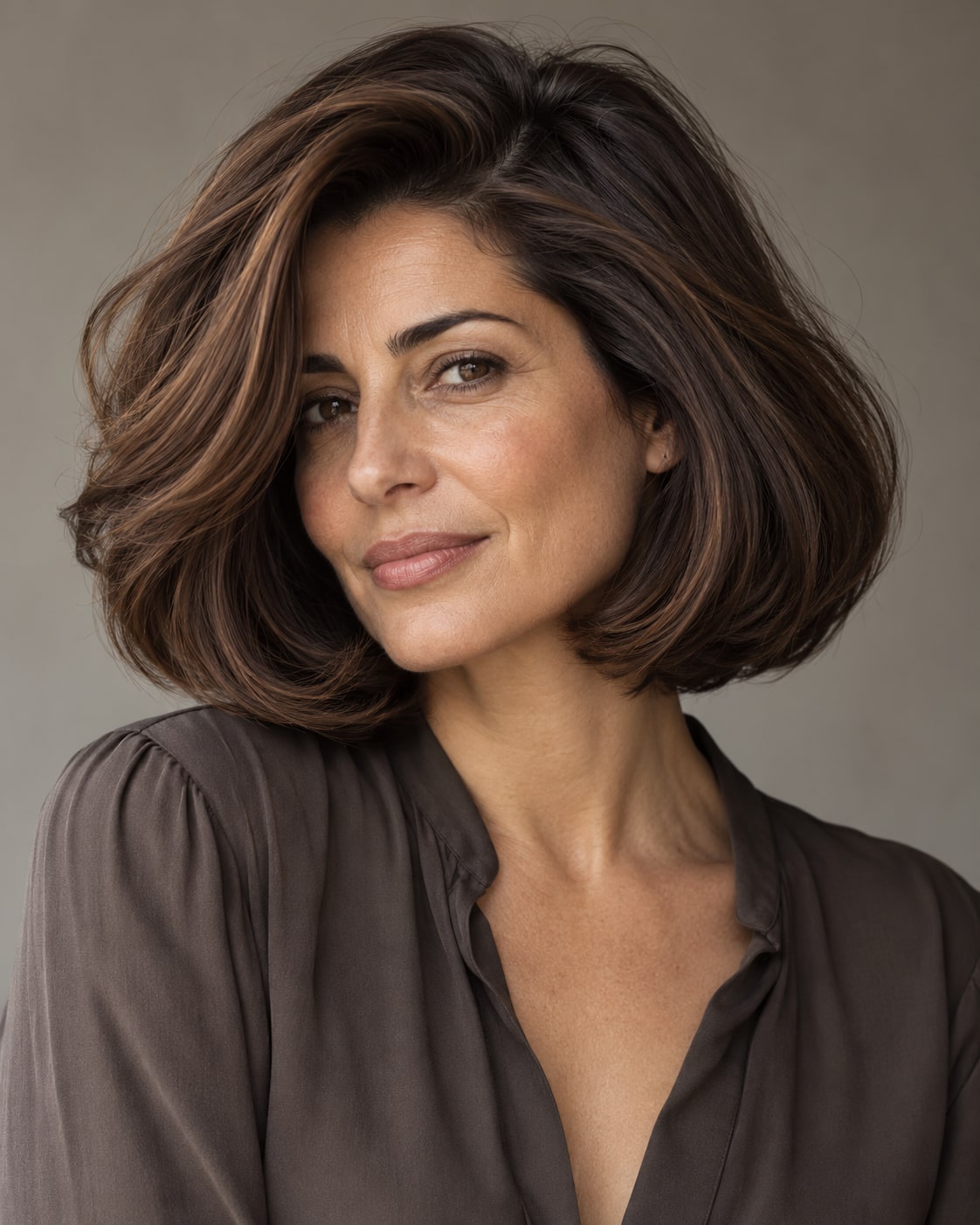
This fuller take on the Italian bob sits below the jaw, with a soft parting that sends more hair to one side. The broad curve through the ends makes the perimeter feel rounded and substantial. Look at the length around the face as well as the volume: both contribute to the shape.
To adapt the look, ask how much weight your hair can keep at the ends without feeling bulky. A round-brush finish can encourage the inward curve, but the result will depend on your texture and the length of the front pieces. Try changing the part before choosing a shorter fringe; a small shift may give you the sweep you want while retaining more styling options.
Rounded Bob with Defined Curls
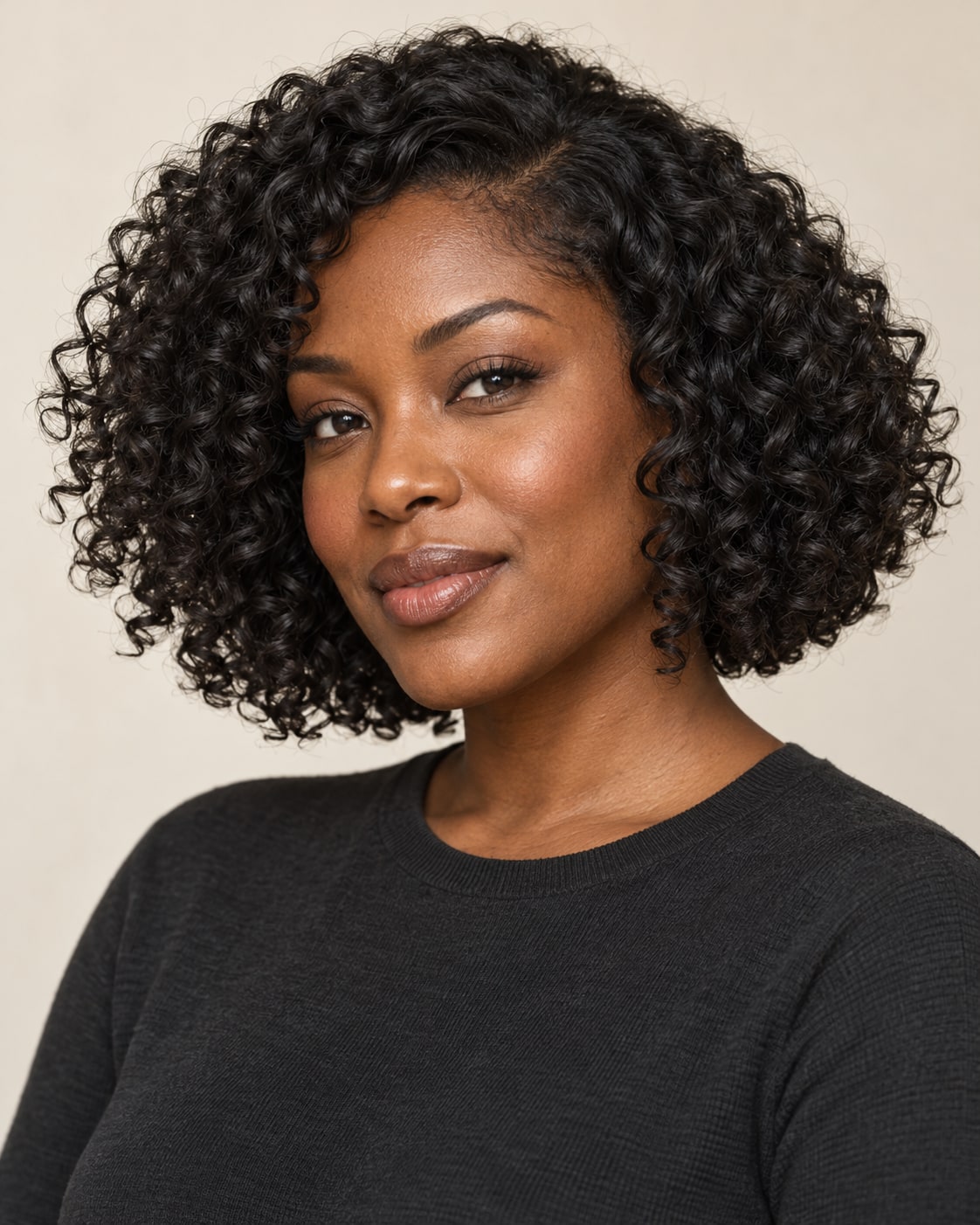
Defined curls build a rounded outline around the face, with the length sitting higher than it would if the strands were stretched. The shape comes from the balance of the crown, sides and ends rather than a sharp straight line. Use this reference to discuss how much width and height you want in your own curly bob.
Agree on the dry length and let your stylist assess how different sections spring up. When styling, distribute your usual curl product through damp hair and avoid disturbing the curl groups as they dry. If you diffuse, a gentle airflow can help keep the definition intact. Ask which areas need reshaping as the cut grows rather than assuming every curl needs the same amount removed.
Sleek Angled Bob with a Shorter Back
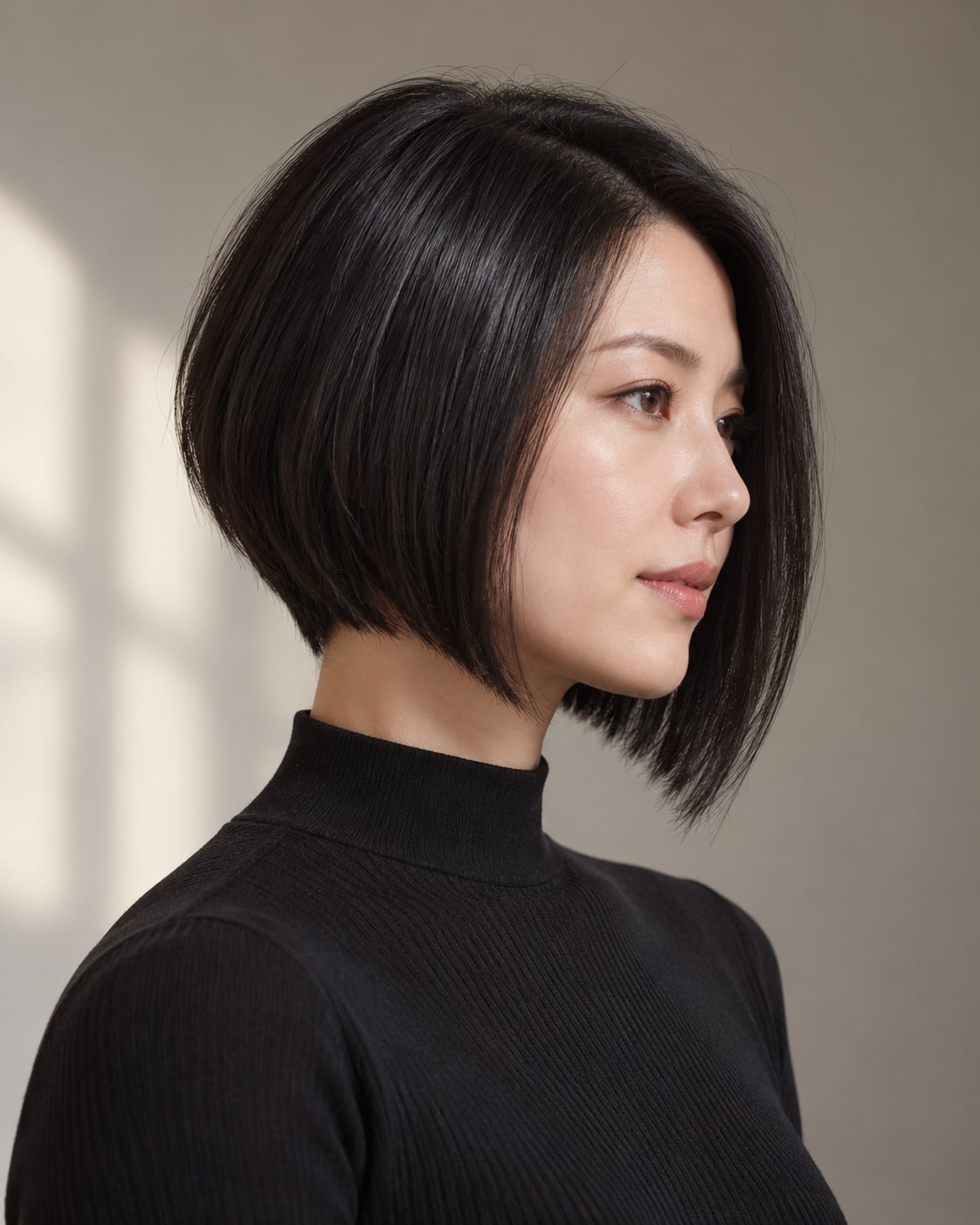
The side view makes the angle easy to read: the back sits higher, and the line lengthens toward the jaw. Smooth black hair keeps attention on that diagonal edge. This is a useful alternative to an even bob if you like a compact neckline but want more length near your face.
Bring a side-view reference to the appointment and agree on both the front length and the amount of neck you want exposed. Ask how the back will settle with your natural growth pattern; a photograph cannot tell you how your nape will behave. A precise angle needs occasional reshaping to keep its proportions, even if you usually wear the finish smooth.
Copper Wavy Bob with Curtain Bangs
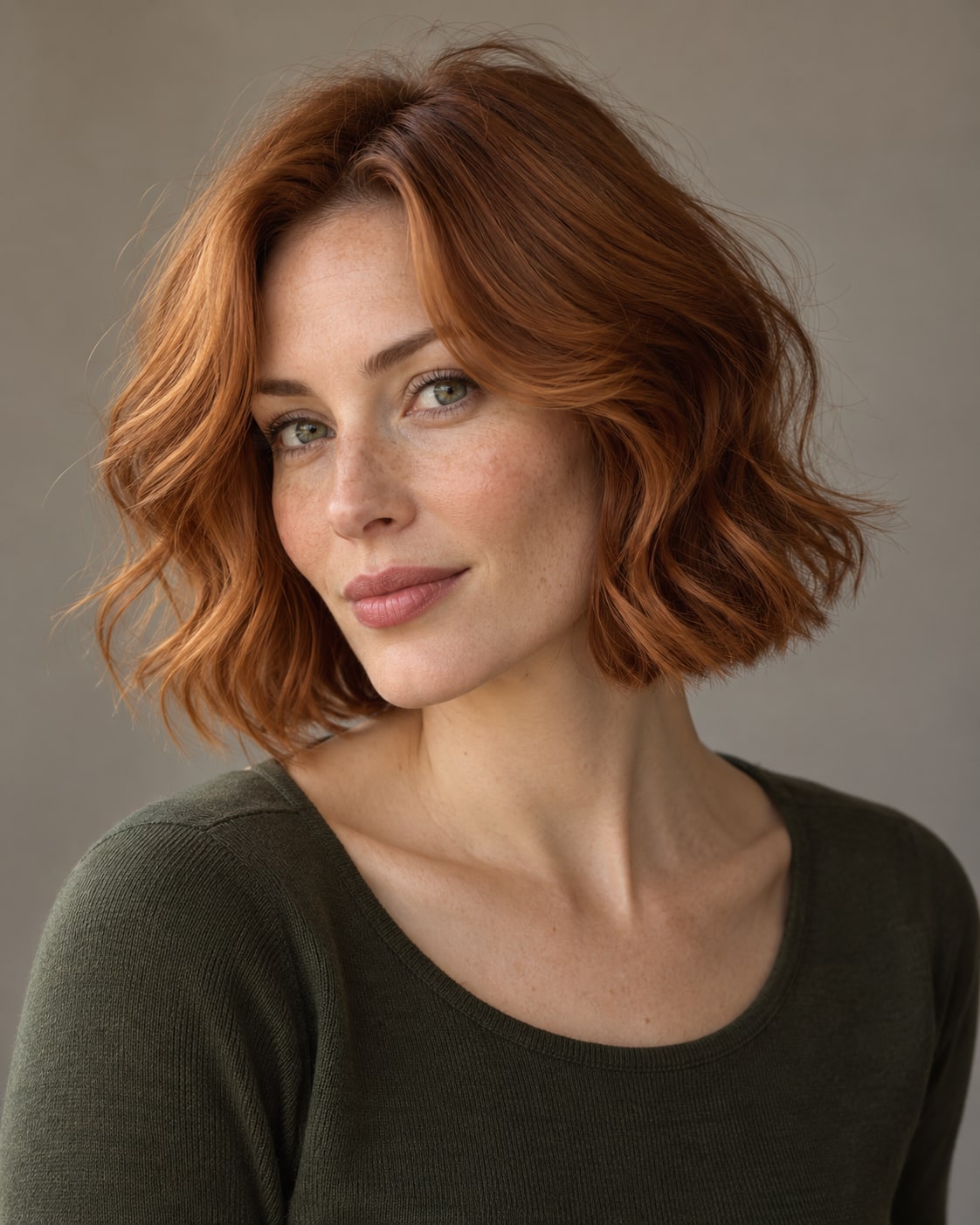
Copper color makes the bends easy to see, but the defining detail is the way the curtain fringe opens and joins the sides. The waves break up the edge of the bob while keeping an overall compact shape. If you like the outline, you can use it as a reference in a different color.
Ask where the shortest front pieces should fall and whether they will sit as shown when you let your hair dry naturally. Encourage an existing wave with light scrunching, or use a brush to guide the fringe away from the center. If you use a heated tool for the bends, protect the hair first and leave some variation between sections so the finish does not become a uniform curl.
Silver Graduated Bob with Crown Lift

A rounded crown and a shorter back give this silver bob its lifted profile. The side part lets the front sweep across gently, while the ends curve toward the face. Rather than focusing only on the silver shade, notice how the back and front lengths work together to keep the shape compact.
Ask your stylist how the crown would fall with your own density and growth pattern, and how much graduation would be comfortable at the nape. A brush can guide the roots upward before you smooth the surface, but the cut should also make sense with your usual routine. If you wear glasses, check that the front pieces sit comfortably over the arms and can be tucked when needed.
Airy Blonde Bob with a Blunt Edge
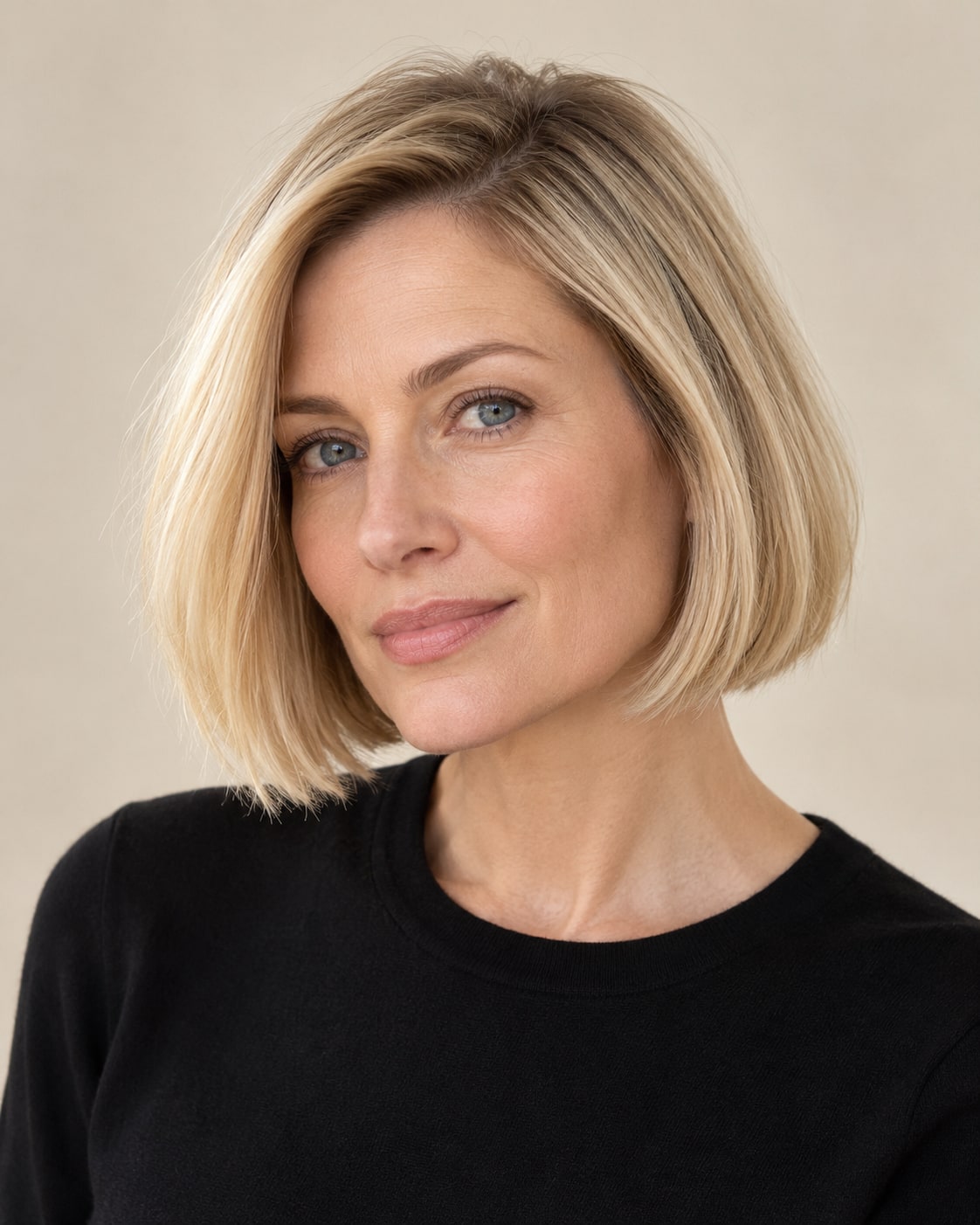
A light finish and a clear chin-length edge can coexist. In this butter-blonde version, the surface stays airy while the perimeter still reads as a bob. It is a useful shape to discuss if you want movement without making the ends look heavily thinned or wispy.
If your strands are fine, ask how much weight should remain at the bottom before agreeing to extra layers. Fine texture does not automatically mean low density, so let the consultation guide that choice. Try a small amount of light styling product and lift the roots as you dry; keep richer finishing creams toward the ends only if your hair needs them.
Honey-Blonde Wavy Lob
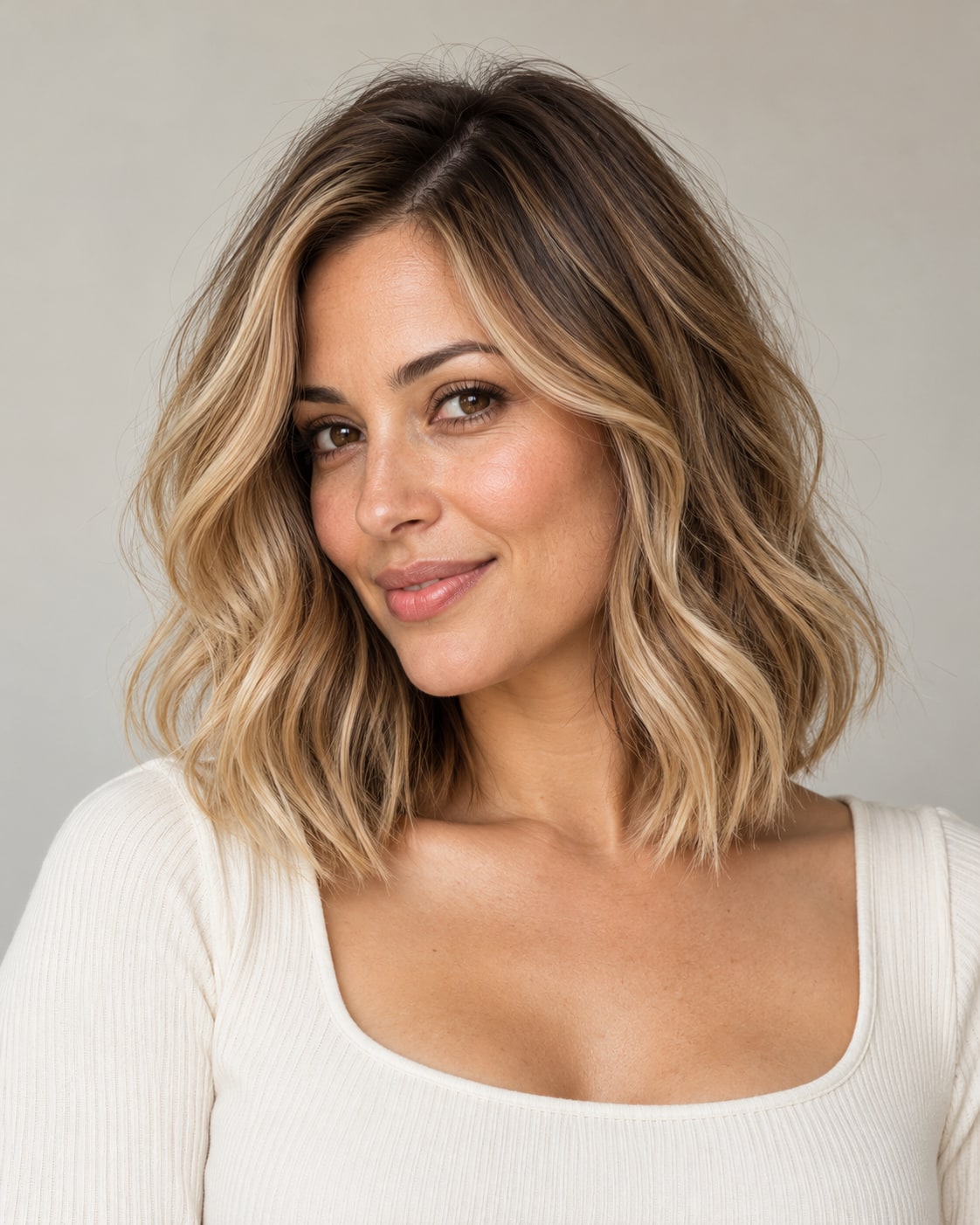
The collarbone length gives loose waves more room to open than a jaw-length bob. Darker roots and honey-blonde lengths show the changes in direction, while the ends keep the outline relaxed. This is a useful middle ground if you want to explore a bob shape while retaining more length around the neck.
Check whether this length can be tied back in the way you need; front pieces may still slip free. For a similar finish, work with your natural bends or add a few loose waves through the middle, leaving the ends less curled. Discuss color maintenance separately from the cut so you can keep the silhouette even if you prefer your existing shade.
Platinum Asymmetrical Bob
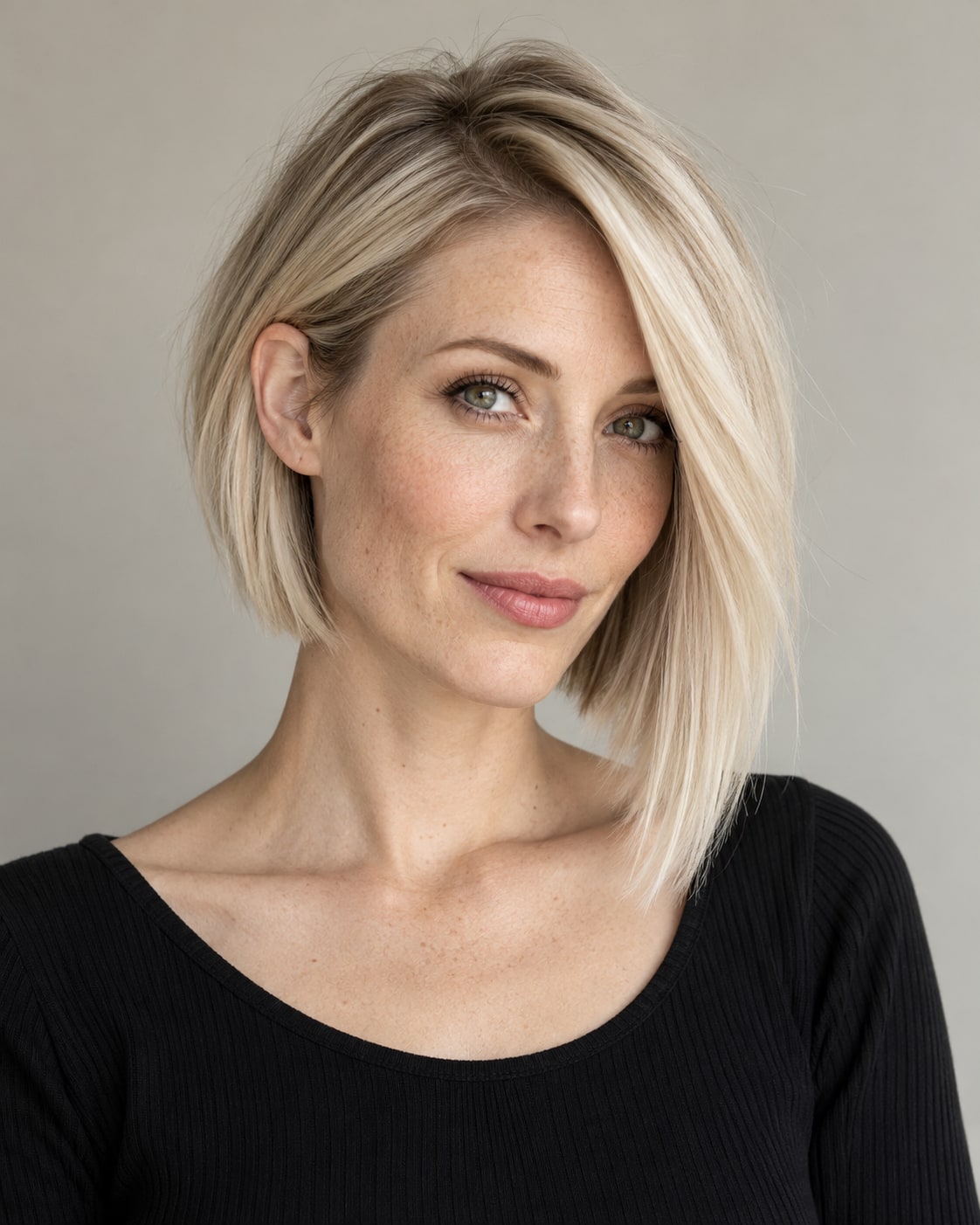
Unequal sides make this platinum bob different from a simple side-parted cut. One side sits higher while the longer front section draws a diagonal line beside the face. The smooth finish makes that contrast clear, so compare both sides rather than choosing the look from the longest section alone.
Ask your stylist to show where each side will finish and how the cut will look when you change the part or tuck an ear. A strong asymmetry is less flexible if you like switching your part every day. The platinum shade is a separate commitment: discuss lightening and maintenance with a colorist rather than assuming the haircut requires this color.
Shaggy Brunette Bob with Wispy Bangs

Separated pieces, a soft fringe and an uneven-looking edge give this brunette bob its shaggy character. The movement sits throughout the shape rather than only at the bottom. It offers a different reference from the blunt bobs in this gallery if you prefer a less solid outline around your face.
Ask how the shorter sections will respond to your texture before removing length through the crown. On hair with a natural bend, scrunching and letting the pieces settle may bring out movement; straighter hair may need more deliberate styling. Use a little finishing product to separate a few sections instead of coating the whole cut, and check how the fringe will behave on days you skip styling.
Glossy Brunette Bob with a Full Fringe

A full fringe adds a second strong line to this smooth brunette bob. The top stays close and glossy, while the ends form a compact frame around the face. Compare the depth and width of the bangs with the lighter fringe in the French bob: they create noticeably different amounts of coverage.
Before committing to a full fringe, discuss your front growth pattern and where you want the bangs to sit with glasses or brows. Drying the fringe early can make it easier to guide into place, but an exact finish still takes upkeep. Keep the chosen fringe length realistic for your trim routine, and ask to see how the bob looks with the sides tucked.
Salt-and-Pepper Bob with Soft Waves

Silver and darker strands trace the soft waves in this jaw-length bob. A gentle parting keeps the front open, and the curved sides give the outline movement without turning it into a heavily layered shag. The blend of tones is part of the illustration, while the shape can be adapted to many colors.
Ask your stylist how your wave pattern and any differences in strand texture will affect the edge. Use a light leave-in or styling product where you need control, then allow the bends to set before separating them. If you prefer a brush finish, keep the curve loose rather than rolling every end tightly underneath; the aim is to retain the visible movement.
Compact Bob with Natural Coils
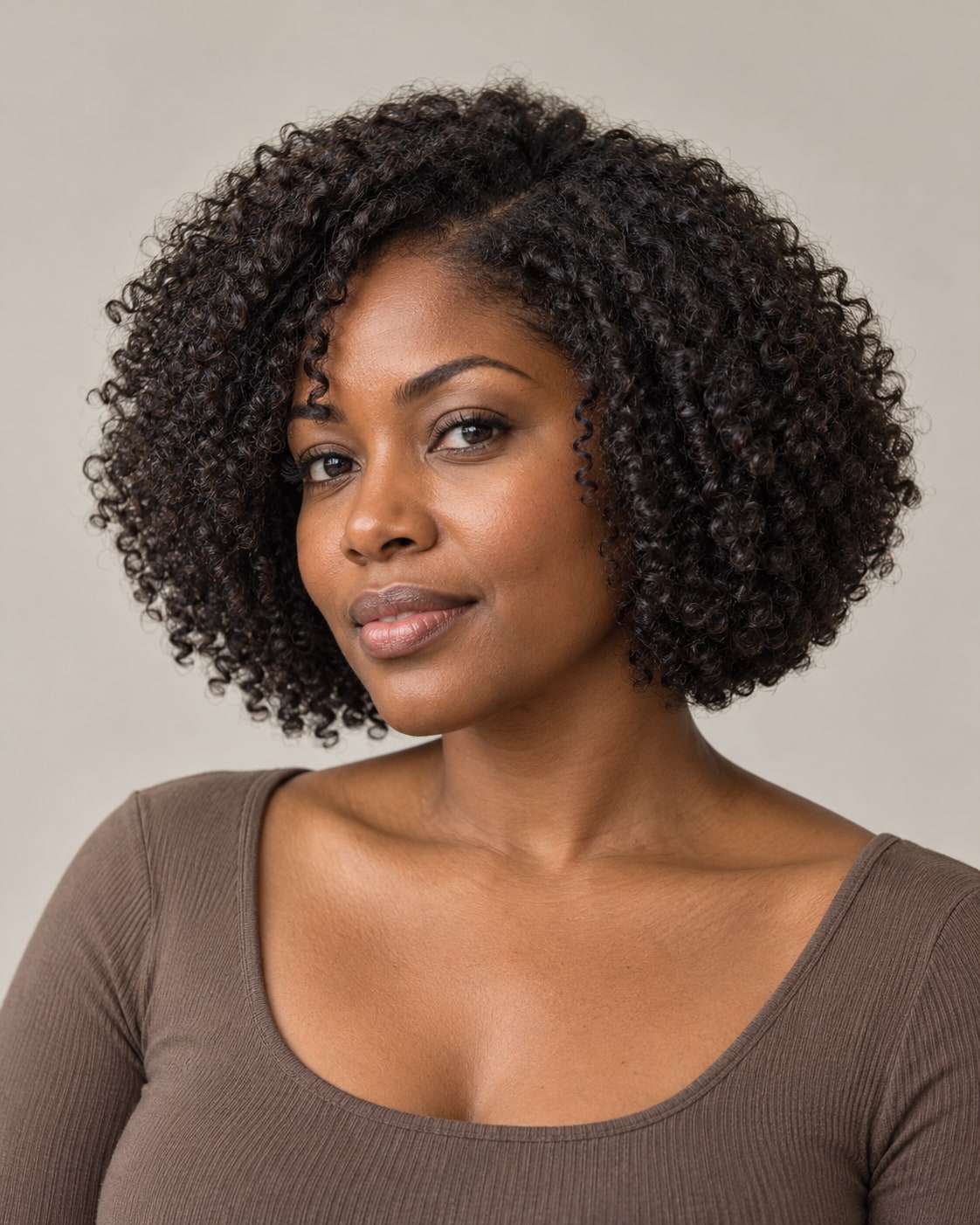
Small coils create a compact, rounded bob with a textured edge. The balance between the crown and sides matters more here than a ruler-straight perimeter. Use the illustration to describe the overall width and finished length you want, while leaving room for your own coil pattern and shrinkage.
Agree on the shape at its usual dry size before cutting, and discuss how it will change between wash days or stretched styles. Work styling product through sections if that is part of your routine, then let the coils set before separating them. A stylist familiar with your texture can help plan the outline without relying on the exact density or curl grouping shown in an illustration.
Chestnut Bob with an Ear Tuck
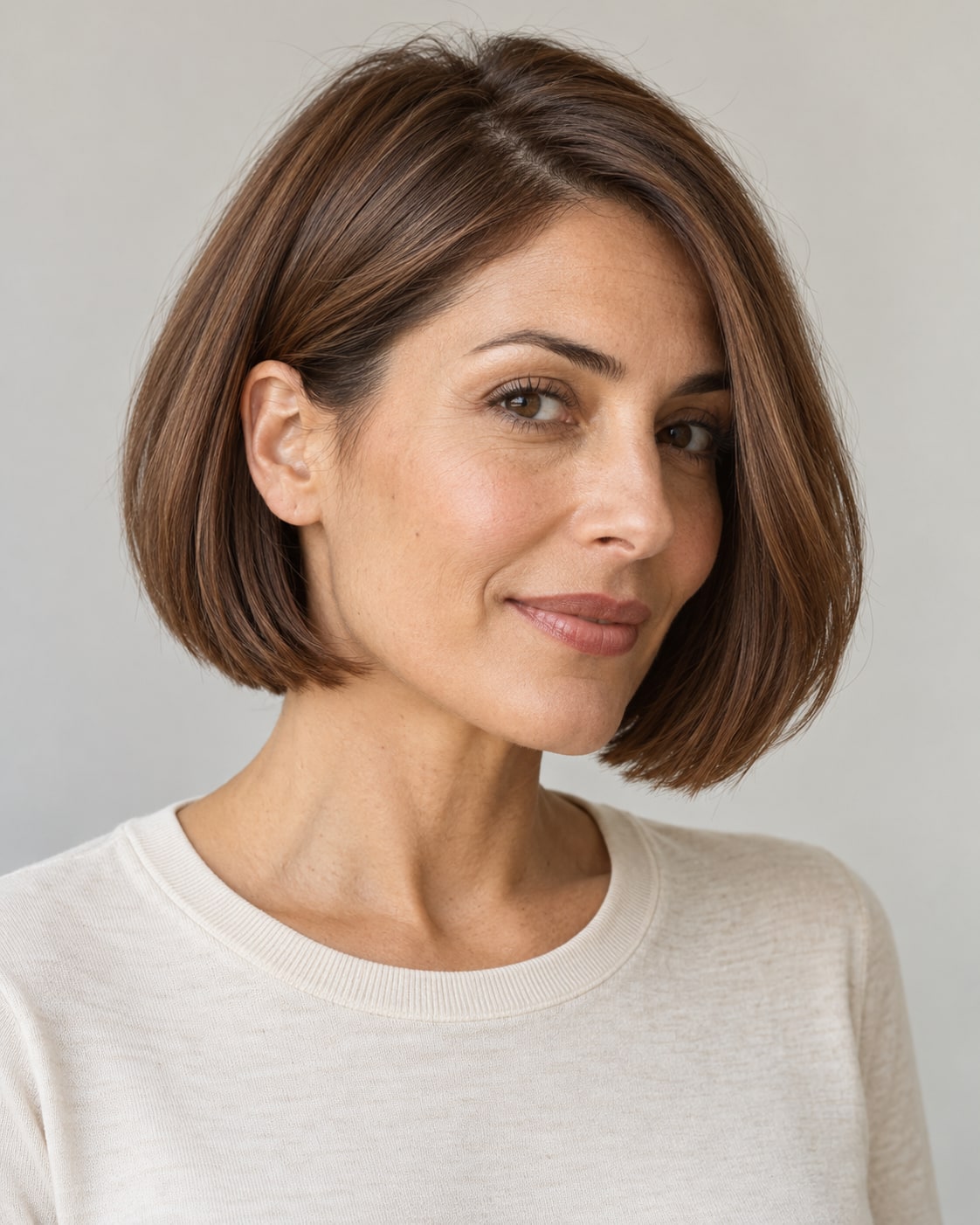
An ear tuck changes the silhouette without adding a fringe or taking away more length. One side sits close to the head while the other keeps the soft curve of the chestnut bob. It is a useful styling reference if you like a clean, open side but want the option to wear both sides forward.
Tell your stylist that tucking matters before choosing the shortest front length. Ask whether the side will stay behind your ear without a clip and how it will sit with glasses. A small amount of smoothing product can help guide loose pieces, but the tuck should feel comfortable rather than pulled tight. Check the untucked shape too, since that is part of the same haircut.
Peach-Blonde Choppy Bob
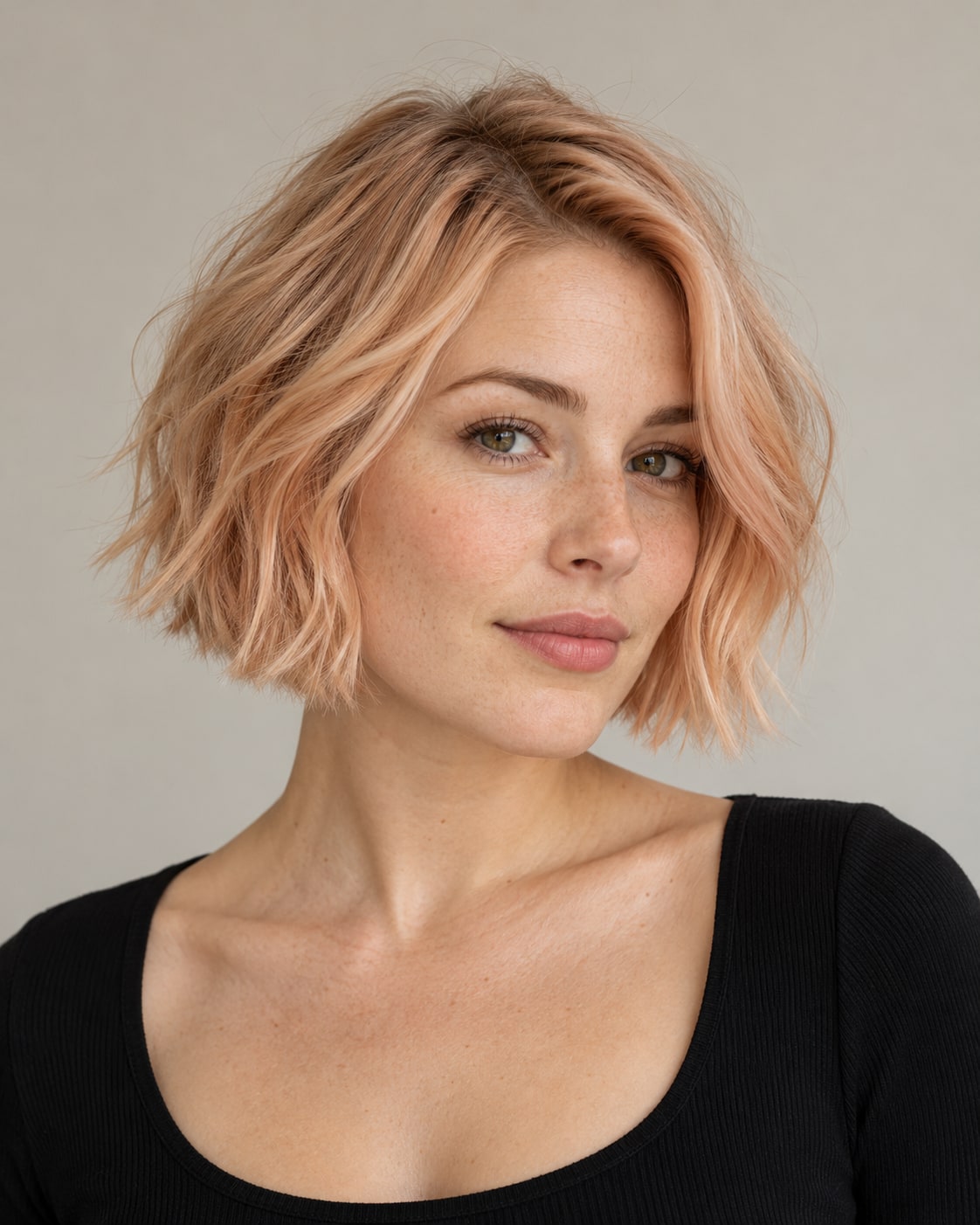
The pale peach tone highlights the separated ends of this choppy bob. Small changes in length make the outline airy, with pieces that turn in different directions instead of sitting along one solid edge. Focus on that perimeter if you like the cut but would choose a different color.
Ask how much separation your hair can carry without making the bottom feel too sparse. You can define a few ends with a small amount of light paste or texture product, applied gradually. The pastel shade may fade and need separate upkeep, so discuss the color plan on its own terms. A textured finish is a styling choice, not a promise that the haircut will need no attention.
Brunette Bob with Flipped-Out Ends

A small outward bend gives this dark brunette bob a different finish from the inward curves elsewhere in the gallery. The crown stays relatively smooth, letting the turned-out ends define the edge. It is a styling detail you can discuss even if you prefer a familiar, simple bob shape.
Ask whether the chosen length works with the way your ends naturally bend, especially near the neck. To create a similar finish, guide only the lower section outward with a brush or heated tool, using heat protection when needed. Keep the bend soft and let the hair cool before adjusting it. Compare the same cut worn straight so you are comfortable with both finishes.
A bob can have a sharp edge, a soft curve or a rounded cloud of curls. The length alone does not decide how it will look: the weight at the ends, the parting and the way your hair bends all change the outline. Before choosing a reference, think about how you usually wear your hair and which details you would be happy to style each morning.
These seventeen NextHaircut hairstyle illustrations compare straight, wavy, curly and coily versions, with lengths from the jaw to the collarbone. Some use a clear, nearly one-length perimeter; others make room for movement through layers or a shorter back. Treat color as a separate choice so you can identify the shape you like without committing to the shade in the illustration.
What to discuss before choosing a bob
Bring a reference that resembles your hair's usual texture, then point out the specific length, fringe and outline you want. Fine strands and low density are different things, and neither can be diagnosed from a picture. Ask how much weight should stay at the ends, where your hair naturally separates, and how the cut will sit when it dries without a brush finish. With curls and coils, agree on the finished dry length rather than judging by stretched strands.
A crisp fringe or close neckline may need attention sooner than a longer, softer outline. Mention glasses, ear tucking, exercise and whether tying your hair back matters. These everyday details can be more useful than choosing a haircut by a face-shape label.
Choose a reference you can adapt
Save two or three examples below and list one detail from each: the edge of a blunt bob, the movement of a wavy lob or the shape of a curly fringe. Ask your stylist which combination works with your growth pattern and preferred routine. For a broader comparison of shorter lengths, see our short hairstyles for older women, including pixies, bobs and crops.
What Is a Bob Haircut?
Bob Haircuts work best when the shape, texture, color, and upkeep fit the person wearing them. Use this guide to compare the inspiration above with your face shape, hair density, styling routine, and the level of maintenance you want before saving a look for your stylist.
Start with the outline: where volume sits, how the ends are shaped, and whether the front opens the face or frames it. Fine hair usually benefits from airy layers and visible lift, while thick hair often needs internal texture so the shape feels light instead of bulky.
How to Choose the Right Bob Haircut
Bring two or three references from this article and the Bob Haircut category, then describe what you like about each one. Mention your natural texture, how often you use heat tools, and whether you prefer a polished finish or a more lived-in shape.
Styling and Upkeep Tips
Shorter and more shaped styles usually need trims more often, while longer layered versions can grow out more softly. Lightweight texture cream, root lift, gloss spray, or color-safe care can make a major difference depending on the finish you choose.