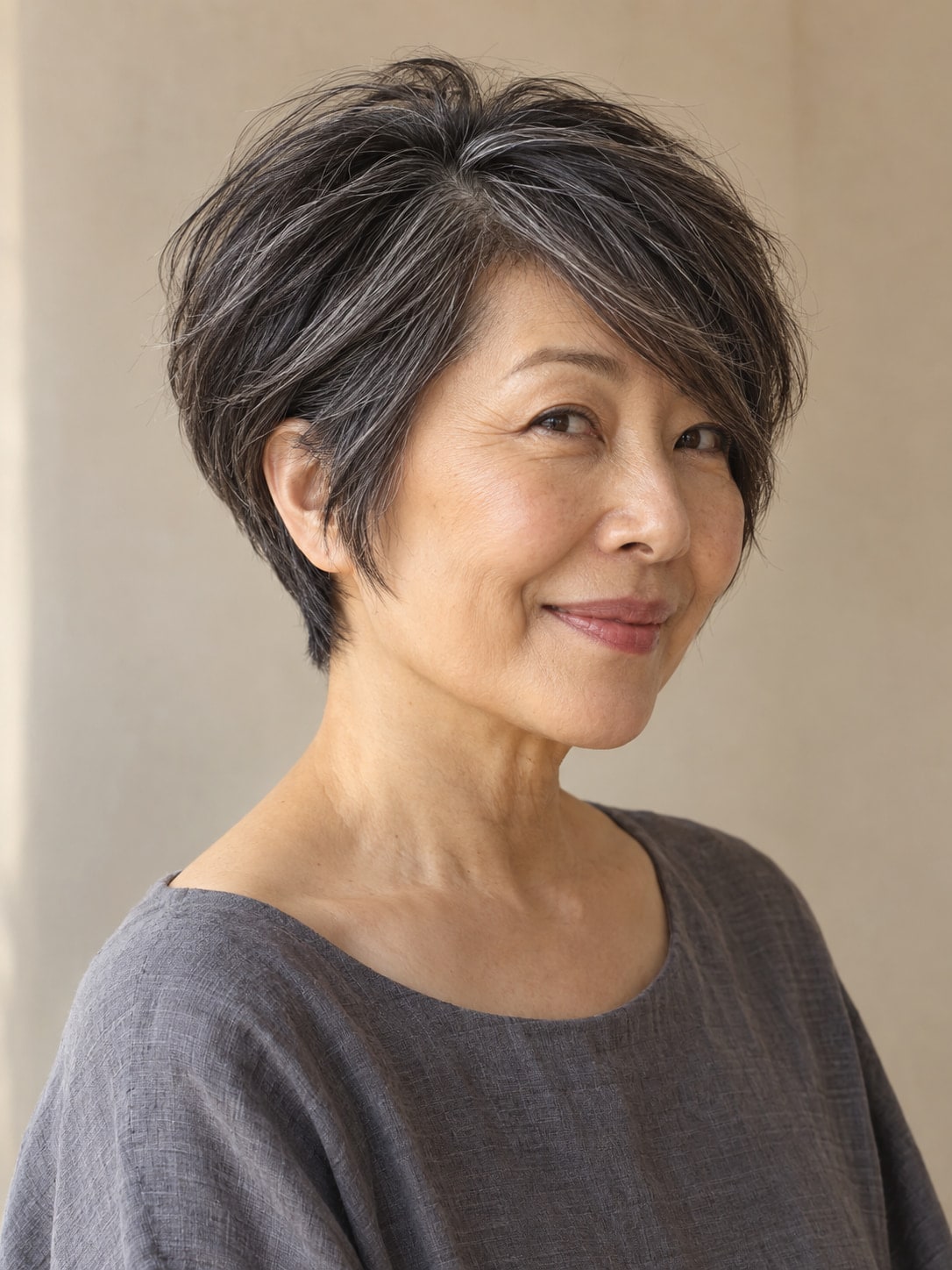
A short haircut can leave your neck clear, make the outline of your hair more defined, or give familiar waves a different shape. It does not have to follow an age rule. The useful starting points are how your hair falls naturally, how much length you want around your face, and the time you are comfortable spending on styling and trims.
These twelve short hairstyles for older women range from close pixies to jaw-length bobs. Compare the neckline, fringe and balance of each look as well as its color. A silver pixie and a copper pageboy can both feel expressive, but they ask for different daily routines.
Choose the shape before the color
For fine hair, look closely at the ends: a clear perimeter can keep a bob looking substantial, while too much texturing may make it look sparse. With dense hair, discuss where to remove weight without losing the shape. Waves, curls and cowlicks can change the way a fringe or short crown sits, so ask your stylist to assess your natural texture rather than copying a photograph strand for strand.
A close neckline usually shows growth sooner than a softer bob. Longer fringe gives you more direction to play with, but may need a quick reset after sleeping. Think about whether you want hair tucked behind your ears, how the cut sits with glasses, and whether you prefer air-drying or a brush finish.
Make the reference useful at your appointment
Save two or three looks below and name the details you like: an open ear, a curved jawline, a swept fringe or a rounded crown. Also say what you would change. Ask how those details would work with your hair, how the cut would look without a styled finish, and what its trim routine would involve. A useful reference starts a conversation; it does not need to become an exact copy.
1. Soft Textured Silver Pixie
The contrast between a soft, separated crown and a close neckline gives this silver pixie a clear shape without a severe outline. Small pieces around the forehead keep the finish relaxed; the interest comes from the direction of the hair rather than a tall, stiff lift.
On straight or gently wavy hair, try shaping the top with your fingers and using a small amount of light finishing product only where you want separation. Ask for enough crown length to follow your growth pattern. A close taper will need reshaping sooner than a longer bob, so include the neckline in your maintenance conversation.
2. Side Swept Bixie
A bixie sits between a pixie and a bob: the back is compact, while the sides and fringe keep more length. Here, a diagonal sweep crosses the forehead and the hair curves around the ears, making this a softer option if you want short hair without a closely cropped front.
The longer fringe can be swept aside or lightly tucked, but its direction needs to work with your parting and cowlicks. Ask your stylist how much length to leave near the temples and whether the back should be tapered or simply softened. Keep finishing product away from the roots if your hair becomes flat easily.
3. Chin Length French Bob
This French bob keeps a defined chin-length outline and pairs it with a light, short fringe. The ends sit close to the jaw rather than falling onto the shoulders. A small amount of movement keeps the shape from feeling rigid, while the shorter fringe leaves a clear space above the eyes.
Use the jawline as the reference, then discuss the finished length on dry hair, especially if yours waves or curls as it dries. A short fringe can emphasize a cowlick, so its density and length deserve a separate conversation. Ask for a perimeter that feels solid without forcing every strand into a perfectly smooth finish.
4. Tapered Natural Curly Crop
A rounded crown of natural coils gives this crop its shape, while the tapered sides and neck keep the outline compact. Salt-and-pepper strands make the curl pattern easy to see. The top remains visibly longer than the sides, so the cut has contrast without becoming a flat, all-over crop.
Discuss the dry shape and shrinkage before settling on the top length. Curl definition and a soft finish will depend on your own pattern and routine; choose products you already know your hair tolerates. Ask how the taper will connect to the crown as it grows, rather than choosing a very close neckline simply because it appears neat in the reference.
5. Feathered Short Cut
Sandy-blonde layers sweep away from the face and connect to a lifted crown in this feathered short cut. Unlike a close pixie, it keeps soft length around the ears and nape. The outward movement is the defining detail, so save this look if you like a brushed, flowing finish rather than a blunt edge.
That direction may take a short brush or blow-dryer pass when your hair naturally falls forward. Ask for layers that move together instead of removing weight from every section. On finer hair, keeping some fullness at the lower edge can make the shape look more balanced. Check the cut in its unstyled state too, so you know what to expect on quieter mornings.
6. Rounded Salt and Pepper Bob
A curved jaw-length outline and a subtle side part give this bob a quiet, rounded finish. There are no bangs; the front follows the cheek and joins the lower edge. The mix of darker and silver strands adds visual detail while the overall shape stays simple.
This reference is useful when you want a bob with fullness at the sides rather than a sharp angled front. Ask how much internal layering your density needs: a rounded shape does not automatically require heavy texturing. A gentle brush finish can turn the ends under, but check whether that curve remains comfortable with your natural texture and the amount of styling you want to do.
7. Airy Layered Pixie
This airy pixie keeps longer, rounded layers through the crown and a wispy fringe near the brows. Warm-white hair makes the overlapping pieces visible without a strongly spiked finish. It is softer around the front than the first textured pixie and leaves more hair to redirect from day to day.
Ask your stylist to preserve the small sections that give the fringe its movement, while checking that the ends do not become too thin. A light root lift or a gentle brush pass may help when the top dries flat. The fringe can need a quick refresh between washes even when the back is easy to manage; consider that detail before calling any short cut maintenance-free.
8. Ear Length Wavy Bob
Loose silver waves sit around the ears in this short bob, with a side part opening the front. The compact length gives the waves a rounded outline without the longer ends of a jaw-length bob. It is the movement at the sides, rather than a fringe or a stacked back, that defines this look.
Choose this reference with your dry wave pattern in mind. Removing length can change how much a wave springs up, so agree on where the finished edge should sit. Scrunching and leaving the hair undisturbed as it dries may preserve natural movement; if you create the waves with a tool, include that extra styling step in your decision.
9. Short Shag with Curtain Fringe
A center-opening fringe and visible, tousled layers give this short shag a different outline from the smoother bobs. Shorter pieces around the crown connect to an ear-to-upper-jaw perimeter, leaving soft movement near the face. The curtain fringe separates to either side rather than sweeping in one diagonal line.
Ask where the shortest layer will land and how it will behave when your hair dries naturally. Too much layering can reduce the lower edge on fine hair, while dense hair may need more careful weight removal. This look has a relaxed finish, but relaxed does not mean unshaped: the fringe and crown still need to work with your growth patterns.
10. Classic Copper Pageboy
The pageboy's smooth fringe and continuous rounded lower edge create a compact, graphic shape. Copper gives this version warmth, but the cut is recognizable because the sides turn inward and connect with the back. The finish is deliberately smoother than the French bob or the layered shag.
A pageboy asks for a fairly consistent outline. Discuss the fringe against your natural parting, and ask whether a brush finish is needed to turn the ends under on your texture. If you also choose copper color, treat its refresh routine as a separate decision from the haircut. You can keep the same silhouette in gray, brunette or blonde.
11. Stacked Nape Bob
Gentle graduation at the nape supports the back of this bob, while the front sections extend toward the jaw. Warm brunette and gray strands show the change in direction from the compact back to the longer sides. The result is more angled than the rounded salt-and-pepper bob without needing an extreme, high stack.
Bring a side-view reference as well as a front view so your stylist can see the amount of graduation you want. Ask how the nape will grow out and how much brushing the back needs. Keep the forward sections long enough for the shape you prefer, rather than assuming a shorter back requires very short sides.
12. Asymmetric Pixie with Long Side Fringe
One short side exposes the ear while the opposite side keeps a long, sweeping fringe. That uneven balance gives this charcoal-and-silver pixie its character. It is a clearer contrast than the softer bixie, and the longer front remains the focal point rather than blending into an even rounded outline.
Decide which side you want open before the cut, using your natural parting as a guide. Ask how the long fringe will sit on an ordinary day and whether you will need to redirect it after washing. The short side and long side grow out differently, so plan how you want the silhouette to change between trims. Choose the contrast because you enjoy it, rather than because short hair is expected at a particular age.
What Is a Hairstyle for Older Women?
Hairstyles for Older Women work best when the shape, texture, color, and upkeep fit the person wearing them. Use this guide to compare the inspiration above with your face shape, hair density, styling routine, and the level of maintenance you want before saving a look for your stylist.
Start with the outline: where volume sits, how the ends are shaped, and whether the front opens the face or frames it. Fine hair usually benefits from airy layers and visible lift, while thick hair often needs internal texture so the shape feels light instead of bulky.

How to Choose the Right Hairstyle for Older Women
Bring two or three references from this article and the Hairstyles for Older Women category, then describe what you like about each one. Mention your natural texture, how often you use heat tools, and whether you prefer a polished finish or a more lived-in shape.
Styling and Upkeep Tips
Shorter and more shaped styles usually need trims more often, while longer layered versions can grow out more softly. Lightweight texture cream, root lift, gloss spray, or color-safe care can make a major difference depending on the finish you choose.